
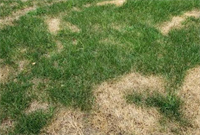
Too Much of a Good Thing: How Overwatering Is Destroying South Florida Landscapes
Why the irrigation system keeping your Palm Beach County property green may actually be making your lawn, hedges, trees and soil sick
A beautiful South Florida landscape needs water. But it doesn't need constant water.
In fact, one of the most common problems we encounter in residential landscapes throughout Palm Beach County is not drought. It is overwatering. Homeowners understandably want their lawns green, their hedges lush and their ornamental plants thriving. When something begins to look stressed, the instinct is often simple: Add more water.
Unfortunately, that can be exactly the wrong response. A thirsty plant needs water. A drowning plant needs oxygen. And healthy roots need oxygen.
For a luxury property, where mature trees, established hedges, specimen plants, extensive turf and carefully designed landscape beds are part of the property's character and value, irrigation management is not a minor detail.
It is part of landscape stewardship.
The Root of the Problem
Roots don't simply absorb water. They also need oxygen from the spaces between soil particles.
When soil remains saturated for extended periods, those air spaces fill with water. Oxygen becomes less available, roots can become stressed or damaged, and the plant's ability to absorb water and nutrients can decline.
This creates one of the most frustrating situations in landscape management:
An overwatered plant can look thirsty.
Yellowing leaves, wilting, poor growth and general decline can all occur when roots have been damaged by excessive moisture. The homeowner sees a struggling plant and thinks:
“It needs more water.” So they turn on the irrigation and the cycle gets worse.
Overwatering → root stress → poor nutrient uptake → plant decline → disease/pest pressure → more treatments → more watering.
That's a landscape-management nightmare.
What Does Overwatering Actually Do?
1. It Damages Roots
Roots require oxygen to function properly. Persistently saturated soil can cause root decline and create conditions favorable to root-rotting organisms. Once enough roots are damaged, the plant may struggle to absorb both water and nutrients—even though there is plenty of water surrounding those roots.
This is why: More water is not always more hydration. Sometimes it is simply more stress.
For mature landscapes, the problem can be particularly difficult to identify because root damage may occur long before there are obvious symptoms above ground.
By the time a homeowner sees significant yellowing, wilting or decline, the problem may already have been developing beneath the soil.
2. It Increases Disease Pressure
Excess moisture can create conditions favorable for a number of plant diseases. Irrigation timing matters too. Watering late in the day or overnight can extend the amount of time that grass blades and foliage remain wet, increasing the opportunity for certain diseases to develop.
For most landscape irrigation, early morning is generally preferable because foliage has an opportunity to dry during the day.
In other words: Wet roots + wet foliage + warm Florida temperatures = a very unhappy landscape.
This does not mean every fungal problem is caused by irrigation. Landscape diseases can result from many interacting factors, including plant susceptibility, weather, soil conditions, drainage and cultural practices.
But excessive moisture can certainly make the environment more favorable to disease.
3. It Encourages Weeds
If your lawn suddenly seems to be developing an impressive collection of moisture-loving weeds, your irrigation system may deserve some of the blame.
Excessive irrigation can contribute to weed problems, particularly when combined with compacted soil or poor drainage. Dollarweed, for example, is often associated with excessively wet conditions.
Sometimes the solution isn't another herbicide. It may be: Turning down the water.
4. It Can Create Nutrient Problems
Healthy roots are essential for nutrient uptake.
When excessive moisture damages roots, plants may struggle to obtain nutrients even when those nutrients are present in the soil.
The result can include:
Yellowing foliage
Weak growth
Poor color
Reduced vigor
Increased susceptibility to environmental stress, insects and disease
The homeowner may then respond with more fertilizer. That can create yet another problem. South Florida's sandy soils can allow water and soluble nutrients to move through the soil profile relatively quickly. Excessive irrigation can therefore contribute to nutrient movement beyond the active root zone.
The answer isn't always more fertilizer. Sometimes the root system needs to be addressed first.
And Yes—Overwatering Affects Your Earthworms Too
Here's something many homeowners don't realize: Those earthworms appearing all over the driveway after irrigation aren't necessarily trying to escape from drowning.
Earthworms breathe through their moist skin, and they can survive underwater for extended periods when sufficient oxygen is available. During heavy rain or irrigation, wet surface conditions can provide an opportunity for worms to move above ground without their skin drying out. So if you suddenly find earthworms crawling across your driveway, sidewalk or patio after irrigation, don't assume you've created an earthworm swimming pool from which they're desperately escaping.
But there is still a lesson here: Earthworms are an important part of a healthy soil ecosystem. They help incorporate organic matter, create channels through the soil and contribute to soil structure and nutrient cycling. And worms that come onto pavement can become stranded and exposed to drying and sunlight.
So if your irrigation is regularly sending earthworms onto the driveway, consider it a clue—not necessarily a coincidence. Your soil may be staying wetter than it needs to be.
Why South Florida Is Particularly Vulnerable
Florida already receives substantial natural rainfall. During the rainy season, a Palm Beach County property can receive significant amounts of water from a single afternoon thunderstorm while the irrigation system continues operating according to its programmed schedule.
The result can be: Rain + irrigation + poor drainage = saturated root zones.
Unless your irrigation system has a properly functioning rain sensor or other rain-shutoff technology, it may continue watering as if nothing happened.
A Small Device That Can Make a Big Difference
A rain sensor monitors rainfall and can temporarily interrupt an automatic irrigation cycle when sufficient rain has occurred. The principle is simple: If nature has already watered the landscape, the irrigation system doesn't need to do it again.
For a Palm Beach County property, that can mean fewer unnecessary irrigation cycles, less water waste and less risk of keeping the landscape wetter than necessary.
But a rain sensor is only one part of proper irrigation management. It cannot correct an improperly programmed controller, poor sprinkler coverage, broken heads, leaking valves, drainage problems or inappropriate irrigation zones.
And a sensor that is installed but broken, disconnected or bypassed provides no protection at all.
For a more detailed look at how rain sensors work, how they can save water and money, their environmental benefits, and what every Florida homeowner should know about maintaining one, see our companion article:
Rain Sensors for Florida Irrigation Systems: Why Your Palm Beach Property Needs One
A rain sensor can help keep unnecessary water out of your landscape.
For additional information regarding rain sensor, read our companion article, Rain Sensors for Florida Irrigation Systems: Why Your Palm Beach Property Needs One, here.
.
But the bigger question remains: How much water does your landscape actually need?
Your Lawn Shouldn't Be Watered Every Day. This is one of the biggest misconceptions we encounter: healthy established turf does not need to remain constantly wet.
A commonly recommended target for established Florida turf is approximately ½–¾ inch of water per irrigation event, adjusted for the specific turf, soil, weather and site conditions, and allowing the lawn to dry between irrigation events. Sandy soils may require careful adjustment because they drain rapidly, but that does not mean the solution is automatically daily irrigation.
Light, frequent irrigation can encourage shallow roots while deeper, less-frequent irrigation, when appropriate for the turf and site, can encourage deeper rooting and improve resilience.
Don't water because the calendar says to. Water because the landscape needs water.
And remember: rainfall counts. If Mother Nature has already delivered substantial rainfall, the irrigation system may not need to run, this is where the rain sensor plays an integral part of your landscape health management.
How Do You Know When Your Lawn Needs Water?
Your lawn will tell you:
1. The blades fold: Grass blades may begin folding lengthwise when they are experiencing water stress.
2. The color changes: The lawn may develop a dull, bluish-gray appearance.
3. Footprints remain visible: Walk across the grass. If your footprints remain visible rather than quickly disappearing, the lawn may be experiencing water stress.
These indicators are far more useful than simply assuming: “It's Wednesday, so the sprinklers must come on.”
What About Hedges, Shrubs and Ornamental Plants?
This is another major source of overwatering: Your hedges should not necessarily be watered like your lawn.
Turf and ornamental plants have different water requirements and should ideally be placed in appropriate irrigation zones. An established hedge with an established root system may need considerably less supplemental water than newly installed plants.
Newly planted shrubs are different: during establishment, their irrigation needs are higher because their roots are still concentrated around the original root ball.
But once established, their needs change. Yet many irrigation systems continue treating them exactly the same way for years.
A well-designed irrigation system should reflect the landscape it is actually serving.
And Trees? Trees Aren't Lawns.
This deserves its own warning. We routinely see mature trees receiving the same irrigation treatment as the turf surrounding them. That is not necessarily what they need.
Newly planted trees require appropriate irrigation during establishment, particularly around the root ball while established trees and shrubs generally have very different irrigation requirements from turf.
Trees aren't lawns and neither are hedges. And neither are ornamental beds.
A properly designed irrigation system should recognize those differences. For an established luxury landscape, irrigation should be considered according to plant maturity, root development, soil characteristics, exposure and the specific requirements of each planting area.
When Is the Best Time to Water?
For most landscape irrigation: Early morning. A common recommended window is around sunrise, often roughly 4:00–8:00 a.m.
Why?
Morning
Lower evaporation
Typically less wind
Water reaches the root zone efficiently
Foliage has the day to dry
Midday
More water can potentially be lost through evaporation, particularly under hot or windy conditions.
Late evening/night
Leaves may remain wet for extended periods, potentially increasing disease pressure and the potential for fungus
So when possible: Water early. Let the sun do the drying.
How Much Water Is Your Irrigation System Actually Delivering?
Here's another problem: your irrigation controller doesn't tell you how much water your plants are receiving, it tells you how long the system is running.
Those are two very different things. A zone running for 20 minutes might deliver significantly more or less water than another zone running for exactly the same amount of time, depending on sprinkler type, nozzle size, pressure, spacing and coverage.
The solution is wonderfully low-tech: Tuna cans.
Place several straight-sided cans throughout an irrigation zone, run the system and measure the water. This simple catch-can approach can help determine how much water a zone is actually delivering and how long it needs to operate to provide an appropriate amount.
Your irrigation controller speaks minutes. Your lawn speaks inches: you need to know the translation.
Your Irrigation System May Be the Problem
Even a correctly programmed controller can't compensate for a poorly maintained irrigation system. Common problems include:
- Broken sprinkler heads
- Misaligned heads
- Clogged nozzles
- Overspray onto sidewalks and driveways
- Leaking valves
- Missing or defective rain sensors
- Lawn and ornamental beds sharing the same zone
- Sprinklers spraying directly onto tree trunks
- Uneven coverage
- Irrigation operating immediately after significant rainfall
Regular inspection and calibration can identify these problems before they become landscape problems. A sophisticated irrigation controller attached to a badly designed or poorly maintained system is still a badly designed or poorly maintained irrigation system.
The Healthy Landscape Starts Beneath Your Feet
One of the biggest mistakes homeowners make is treating symptoms rather than causes.
A brown lawn doesn't automatically mean it needs more water.
A yellow hedge doesn't automatically need fertilizer.
A declining tree doesn't automatically need a fungicide.
And earthworms covering your driveway after irrigation aren't necessarily asking for a lifeguard.
Sometimes the real problem is what is happening underground:
Healthy roots need the correct balance of moisture and oxygen.
Healthy soil needs appropriate moisture, air spaces and biological activity.
And a healthy landscape needs an irrigation system designed around: the plants—not the clock.
The Bottom Line: Stop Watering by the Clock
For an established Florida lawn, approximately ½–¾ inch per irrigation event can be a useful starting point, adjusted for the specific turf, soil, weather and site conditions.
For trees, shrubs and hedges, irrigation should take into account:
Plant maturity + root development + soil + exposure + rainfall + season.
And wherever practical, turf and ornamental plants should be placed on appropriate separate irrigation zones. A properly functioning rain sensor can help prevent unnecessary irrigation after rainfall.
But the rain sensor is only one part of the equation: the goal isn't more water, the goal is the right amount of water.
Healthy Roots. Healthy Soil. Healthy Landscape.
At Island Environmental, we see the consequences of irrigation problems every day:
Root decline.
Fungal problems.
Weak turf.
Struggling hedges.
Yellowing ornamentals.
Plants that become increasingly susceptible to insects and disease.
And homeowners understandably asking: “What is wrong with my plants?”
Sometimes the answer isn't another treatment. Sometimes the answer is: You're watering too much.
If your lawn, hedges, ornamental plants or trees are declining despite regular irrigation, don't automatically turn the water up. Have the landscape—and the irrigation system—evaluated.
Because sometimes the best thing you can do for your plants is surprisingly simple: Turn the water off.